
GHB Legal Status in Canada: Is It Illegal? Everything You Need to Know (2025 Guide)
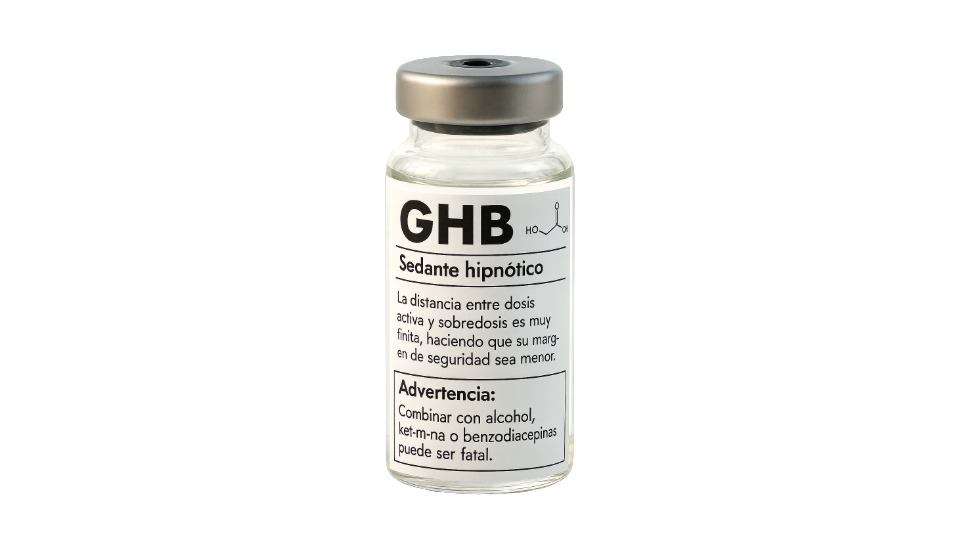
If you’ve been asking “is GHB legal in Canada?”, the short answer is: no — GHB (gamma-hydroxybutyrate) is illegal in Canada for general use. It is a tightly controlled substance under federal law with serious criminal penalties for possession, trafficking, and production. However, there is a narrow exception for medically prescribed use. This comprehensive guide breaks down the GHB legal status in Canada, its federal classification, criminal penalties, and the only lawful pathway to access it.
What Is GHB? A Quick Overview
GHB, short for gamma-hydroxybutyrate (also known as gamma hydroxybutyric acid), is a central nervous system (CNS) depressant that naturally occurs in the human brain in trace amounts. On the street, it is known by many names — liquid ecstasy, G, fantasy, Georgia Home Boy, grievous bodily harm, and the date rape drug. It comes in the form of a clear, odourless, and nearly tasteless liquid or white powder, which makes it especially dangerous as a drug-facilitated sexual assault (DFSA) agent.
GHB is commonly associated with club and rave culture due to its euphoric and sedative effects at low doses. However, it carries an extremely high overdose risk, even at slightly elevated doses, and can be dangerously potent when combined with alcohol or other CNS depressants.
Is GHB Illegal in Canada?
Yes — GHB is illegal in Canada. Under Canada’s Controlled Drugs and Substances Act (CDSA), GHB is classified as a Schedule I controlled substance — the most restrictive category in Canadian drug law, placing it in the same legal tier as heroin and cocaine.
This scheduling was upgraded from Schedule III (alongside amphetamines and LSD) to Schedule I on November 6, 2012, reflecting the serious public health and criminal risks associated with the drug.
As Health Canada explicitly states: “Activities such as sale, possession and production of GHB are illegal, unless authorized for medical, scientific or industrial purposes.”
GHB Under the Controlled Drugs and Substances Act (CDSA)
The Controlled Drugs and Substances Act (CDSA) is Canada’s primary federal legislation governing illegal and controlled substances. It was originally passed in 1996 and has been amended several times to expand and tighten control over substances like GHB.
The CDSA schedules substances based on their abuse potential and medical value. Schedule I substances — including GHB, heroin, cocaine, fentanyl, and opioids — are considered the most dangerous and carry the harshest penalties. The law covers all activities involving GHB:
- Possession of GHB
- Trafficking or selling GHB
- Importing or exporting GHB
- Producing or manufacturing GHB in illegal labs
- Possession for the purpose of trafficking
All of the above activities are criminal offences under Sections 4, 5, 6, and 7 of the CDSAunless explicitly authorized by Health Canada for approved medical, scientific, or industrial use.
GHB Possession Penalties in Canada
Under CDSA Schedule I, the penalties for simple possession include:
- Summary conviction: Up to 6 months in prison and/or a $1,000 fine for a first offence
- Indictable offence: Up to 7 years in federal prison
- A permanent criminal record that can affect employment, travel visas, and educational opportunities
Beyond prison time, a GHB drug charge in Canada can result in:
- Denial of entry into the United States and other countries
- Loss of professional licences (healthcare, law, finance)
- Travel bans and restricted mobility
- Damage to custody or immigration proceedings
GHB Trafficking Penalties in Canada
GHB trafficking in Canada carries some of the most severe drug penalties under Canadian law. Because GHB is a Schedule I substance, trafficking — which includes selling, distributing, giving, or even transporting GHB — carries:
- Mandatory minimum sentence of 1 year in federal prison (with aggravating factors)
- Maximum sentence of life imprisonment for trafficking Schedule I substances
- Up to 2 years minimum if the trafficking involved more than 1 kg of the substance
For those convicted of importing or exporting GHB across Canadian borders, the mandatory minimum starts at 1 year and escalates up to 2 years if the quantity exceeds 1 kg.
GHB Precursors: GBL and 1,4-BD in Canada
Two chemical precursors to GHB — gamma-butyrolactone (GBL) and 1,4-butanediol (1,4-BD) — are also controlled in Canada as Class A precursors under the CDSA. This means that possessing, importing, or exporting these chemicals requires a licence and a permit from Health Canada. GBL and 1,4-BD are legally used in industrial processes (such as solvents and cleaning agents), but any intent to convert them into GHB for human consumption is a criminal offence.
The Only Legal Use of GHB in Canada: Xyrem (Sodium Oxybate)
There is one narrow, legal medical use of GHB in Canada: the prescription medication Xyrem (sodium oxybate), manufactured by Jazz Pharmaceuticals.
Key facts about Xyrem in Canada:
- Active ingredient: Sodium oxybate (the sodium salt form of GHB)
- Approved indication: Treatment of cataplexy associated with narcolepsy
- Administration: Oral liquid solution, taken at night under physician supervision
- Access: Prescription-only; cannot be purchased over-the-counter
- Abuse risk: Classified as having significant abuse and addiction potential even in pharmaceutical form
Any misuse, diversion, or sale of Xyrem outside of a prescription is still a criminal offence under the CDSA.
GHB vs. Canada vs. International Law
GHB and Impaired Driving in Canada
Using GHB can also lead to impaired driving charges in Canada. Because GHB is a CNS depressant, it significantly affects motor coordination, reaction time, and judgment. Under Canada’s impaired driving laws, operating a vehicle while under the influence of GHB is a criminal offence — carrying mandatory minimum fines starting at $1,000 for a first offence, escalating to prison time for repeat offenders.
Frequently Asked Questions: GHB Legal Status Canada
Can I buy GHB in Canada?
No. Buying GHB in Canada is a criminal offence under the CDSA. There is no legal retail or online marketplace for GHB in Canada.
Can a doctor prescribe GHB in Canada?
Yes, but only in its pharmaceutical form (Xyrem/sodium oxybate) and strictly for narcolepsy with cataplexy.
Is GHB the same as a date rape drug?
GHB is one of the substances most commonly referred to as a “date rape drug” due to its sedative, amnesic properties and difficulty of detection.
What happens if I’m caught with GHB in Canada?
You face criminal charges under the CDSA, a potential jail sentence, and a permanent criminal record.
Is GHB tested for in drug tests in Canada?
Standard drug panels do not always include GHB, but specialized forensic testing can detect it. Due to its fast metabolism, it is very difficult to detect after 72 hours.
Final Summary
The GHB legal status in Canada is unambiguous: it is a Schedule I controlled substance under the CDSA, making possession, trafficking, importation, and production criminal offences subject to severe penalties — including life imprisonment for trafficking. The only lawful access to GHB in Canada is through a licensed physician prescribing Xyrem (sodium oxybate) for narcolepsy. Whether you’re researching for legal, health, or academic purposes, understanding Canada’s strict GHB laws is critical — the consequences of non-compliance are severe and long-lasting.