
GHB Drug Schedule Canada: Why GHB Is Schedule I & What That Means Legally (2026)
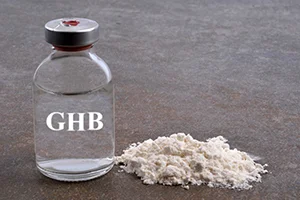
GHB’s drug schedule in Canada is Schedule I — the most restrictive classification available under the Controlled Drugs and Substances Act (CDSA). This places gamma-hydroxybutyrate (GHB) in the same legal category as heroin, fentanyl, cocaine, and methamphetamine, meaning all unauthorized contact with the substance — possession, trafficking, production, or importation — is a serious criminal offence punishable by penalties up to life imprisonment. Understanding GHB’s drug schedule in Canada is essential for anyone researching the substance’s legal status, medical applications, or enforcement landscape.
Canada’s Drug Scheduling Framework
How Controlled Substances Are Scheduled in Canada
Canada’s federal drug scheduling system is governed entirely by the Controlled Drugs and Substances Act (CDSA), enacted in 1996 by the federal Parliament. The CDSA assigns every controlled substance to one of eight schedules, with each schedule determining:
- The severity of criminal penalties for offences involving that substance
- The level of regulatory control over its production, distribution, and research use
- The enforcement priority given to related offences by police and prosecutors
The schedules function as a hierarchy of harm and restriction:
A substance’s schedule is not static — Health Canada and the federal government can reclassify substances upward or downward based on new scientific evidence, emerging abuse patterns, public safety data, or international treaty obligations.
GHB’s Drug Schedule: Then and Now
Pre-2012: GHB as a Schedule III Drug
For most of its history as a regulated substance in Canada, GHB was classified as Schedule III under the CDSA. Schedule III includes substances such as LSD, psilocybin, mescaline, and certain amphetamine analogues — drugs considered dangerous and illegal for recreational use, but carrying lower maximum penalties than Schedule I.
Under Schedule III, the maximum penalty for GHB trafficking was 10 years imprisonment— serious, but substantially lower than the life imprisonment maximum that now applies. Possession carried lighter consequences, enforcement was less prioritized, and the precursor chemical framework was not yet fully in place. This environment contributed to GHB’s growing availability in Canadian nightlife and club scenes throughout the late 1990s and 2000s.
Post-2012: GHB Upgraded to Schedule I
On November 6, 2012, the federal government officially reclassified GHB from Schedule III to Schedule I — the highest restriction tier under the CDSA. This reclassification represented one of the most significant shifts in Canadian drug scheduling in the 2000s and was driven by a convergence of urgent public safety concerns:
- Widespread use in drug-facilitated sexual assault (DFSA): GHB’s colourless, odourless, fast-acting properties made it a primary weapon in sexual assault cases across Canada. Law enforcement agencies documented a sharp rise in GHB-facilitated offences throughout the 2000s.
- Extremely narrow safety margin: GHB’s therapeutic index — the gap between an effective dose and a lethal one — is dangerously small.
- Severe physical dependency: Unlike most recreational drugs, GHB produces a withdrawal syndrome involving tremors, psychosis, seizures, and potentially death — outcomes more commonly associated with alcohol or benzodiazepine withdrawal.
- Increasing illicit production: The relative ease of synthesizing GHB from precursor chemicals — particularly GBL and 1,4-butanediol — was enabling domestic manufacturing operations.
- International convergence: Upgrading GHB to Schedule I aligned Canada more closely with the United States, which had placed GHB in Schedule I of its Controlled Substances Act (CSA) in 2000.
What GHB’s Schedule I Status Means Legally
Every GHB Offence Becomes More Serious
GHB’s Schedule I drug classification under the CDSA directly governs the maximum and minimum penalties for every GHB-related criminal offence. Here is a complete breakdown of how Schedule I status translates into legal consequences:
Possession (CDSA Section 4)
Possessing GHB without lawful authority — in any quantity — is a criminal offence. There is no minimum amount, no personal-use exception, and no provincial decriminalization that covers GHB:
- Summary conviction, first offence: Up to $1,000 fine and/or 6 months imprisonment
- Summary conviction, subsequent offence: Up to $2,000 fine and/or 1 year imprisonment
- Indictable conviction: Up to 7 years imprisonment
Trafficking (CDSA Section 5)
Trafficking GHB — defined broadly as selling, giving, administering, transporting, or offering to provide it to any person — is prosecuted as an indictable offence:
Mandatory minimum triggers include trafficking near schools or playgrounds, involvement of minors, use of weapons, organized crime connections, or prior drug convictions within 10 years.
Possession for the Purpose of Trafficking (POPT)
POPT — where police establish intent to traffic without witnessing an actual transaction — carries identical penalties to trafficking itself: maximum life imprisonment, mandatory minimum 1 year where aggravating factors apply. Evidence establishing POPT includes large quantities, multiple packaged portions, scales, and communications indicating sales activity.
Production (CDSA Section 7)
Manufacturing or synthesizing GHB is an indictable offence under Schedule I. Production penalties scale with the quantity involved, the sophistication of the operation, and its connection to trafficking networks.
Importation and Exportation (CDSA Section 6)
Importing or exporting GHB — including through international mail, land crossings, or air travel — carries the most severe mandatory minimums in the CDSA:
- Mandatory minimum: 1 year imprisonment
- Mandatory minimum: 2 years where quantity exceeds 1 kilogram
- Maximum: Life imprisonment
GHB Precursors and Their Drug Schedule
Schedule VI Class A Precursors
Canada’s CDSA scheduling framework extends beyond GHB itself to cover its chemical precursors. Both GBL (gamma-butyrolactone) and 1,4-butanediol (1,4-BD) — industrial chemicals that convert to GHB once metabolized — are scheduled as Schedule VI, Class A Precursors.
Their Schedule VI classification means:
- Commercial import or export requires a federal licence and permit from Health Canada
- Possession with intent to produce GHB is treated as a Schedule I drug offence — not a lesser regulatory violation
- The “industrial use” defence does not apply where intent to consume as GHB can be established
- Domestic production of GHB from GBL or 1,4-BD is prosecuted at the same severity level as direct GHB production
GHB Drug Schedule and Medical Use in Canada
The Sodium Oxybate Exception
Despite GHB’s Schedule I classification, Canadian law provides a narrow medical-use exemption. Sodium oxybate — the pharmaceutical-grade formulation of GHB — is legally available in Canada under the brand name Xyrem for the treatment of narcolepsy.
Xyrem is prescribed specifically for:
- Cataplexy — sudden, emotion-triggered loss of voluntary muscle control
- Excessive daytime sleepiness (EDS) — the hallmark symptom of narcolepsy
The medical-use exemption is tightly controlled at every level:
- Only authorized specialist physicians (typically neurologists or sleep medicine specialists) can prescribe Xyrem
- Patients must be enrolled in a restricted distribution program with ongoing compliance monitoring
- Xyrem is dispensed through a closed pharmacy network — not available at regular retail pharmacies
- Diverting prescribed Xyrem for recreational use is still a Schedule I criminal offenceunder the CDSA
How GHB’s Drug Schedule Compares Internationally
Canada’s decision to place GHB in its most restricted drug schedule aligns it with a global trend toward stricter GHB controls, though significant variation exists across jurisdictions:
Canada’s life imprisonment maximum for GHB trafficking is the most severe among Western nations, reflecting its Schedule I placement at the very top of the domestic drug restriction hierarchy. The United States, while similarly categorizing GHB as Schedule I for recreational use, provides a more accessible medical pathway through Xyrem’s Schedule III pharmaceutical classification.
The Impact of GHB’s Drug Schedule on Enforcement
National Enforcement Priorities
GHB’s Schedule I classification signals to law enforcement agencies across Canada that GHB offences are a high enforcement priority — equivalent to heroin or cocaine cases. This has practical implications:
- RCMP and provincial police forces actively investigate GHB trafficking networks
- Canada Border Services Agency (CBSA) maintains targeted screening protocols for GHB at all ports of entry
- Nightlife and entertainment venue policing in major cities includes active GHB surveillance given its association with drug-facilitated sexual assault
- Digital and mail interception operations target online GHB sales and precursor chemical imports
Drug-Facilitated Sexual Assault Enforcement
A specific enforcement consequence of GHB’s Schedule I drug schedule is its central role in DFSA investigations. Canadian police services maintain specialized DFSA units trained in the narrow detection window for GHB toxicology. Administering GHB to another person without consent compounds CDSA charges with additional Criminal Code of Canadaoffences, resulting in significantly longer cumulative sentences.
Consequences of GHB’s Schedule I Classification Beyond Criminal Penalties
The downstream effects of GHB’s drug schedule in Canada extend well beyond the courtroom:
- Permanent criminal record for any conviction — visible to employers, licensing bodies, and border agencies
- US travel inadmissibility — Americans deny entry to individuals convicted of Schedule I drug offences in Canada without a formal US Entry Waiver
- Immigration consequences — non-Canadian nationals convicted of GHB offences face deportation and permanent inadmissibility
- Professional licensing barriers — healthcare, legal, educational, and financial sectors conduct criminal screening that flags Schedule I drug convictions
- Record Suspension eligibility — 5 years post-sentence completion for summary convictions; 10 years for indictable convictions — and does not automatically restore international travel rights
GHB Addiction Help and Harm Reduction in Canada
GHB’s placement in Schedule I reflects the genuine severity of its harm profile. GHB withdrawal is medically dangerous, capable of producing life-threatening seizures, severe psychosis, and cardiovascular instability — making it one of the few recreational drug withdrawals that requires hospitalization. Anyone dependent on GHB should seek medically supervised detoxification rather than attempting to stop independently.
Canadian support and treatment resources include:
- CAMH — Centre for Addiction and Mental Health — Canada’s leading addiction medicine institution, offering medically supervised detox
- Here to Help BC — Province-wide substance use education and clinical referrals
- Health Canada Substance Use Program — Federal directory of licensed treatment and harm reduction services
- Canadian Centre on Substance Use and Addiction (CCSA) — National body for addiction research, policy development, and public education
- Crisis Services Canada — Free, bilingual, 24/7 crisis intervention and treatment referral line